
The Royal Tradition
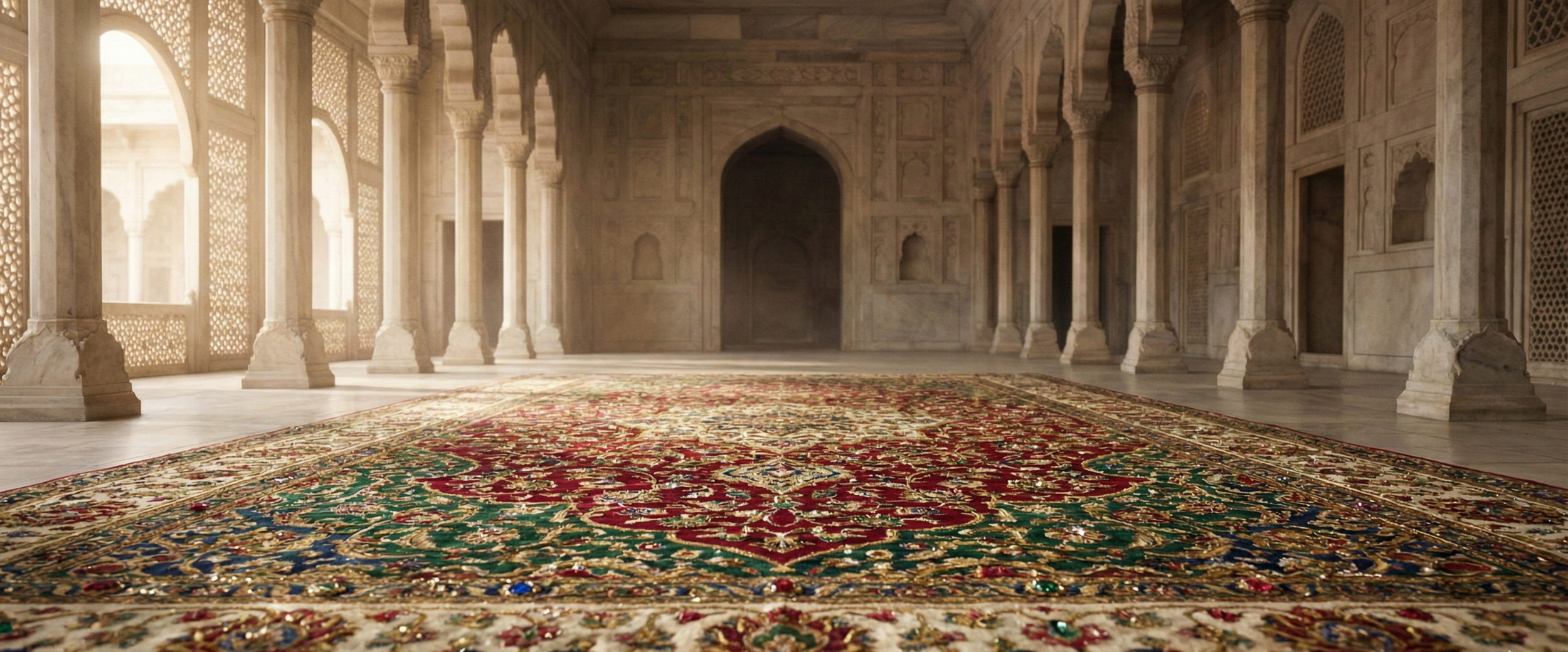
Ottoman emperors walked on bejewelled carpets. P.C. Lunia continues that royal tradition.
The Origin of the Red Carpet
The tradition of jewelled textiles traces to the Ottoman court, where emperors walked on carpets studded with precious gemstones. This was not mere decoration—it was a display of divine authority, a physical manifestation of sovereignty that required subjects to witness the ruler's power with every step.
From Empire to Atelier
The tradition passed from Ottoman ceremony to Mughal splendor to the princely states of India. The Pearl Carpet of Baroda—commissioned by the Gaekwad dynasty—represents one famous example. P.C. Lunia's work represents the modern culmination of this lineage.
An Art Form Reserved for Sovereigns
What was once an expression of royal power has evolved into a sacred expression. P.C. Lunia transformed the tradition—creating bejewelled textiles not for kings, but for the divine. The Kaaba Sharif Jewel Tapestry honours Islam's holiest site; the Pink Floral Tapestry celebrates natural beauty asa spiritual offering.